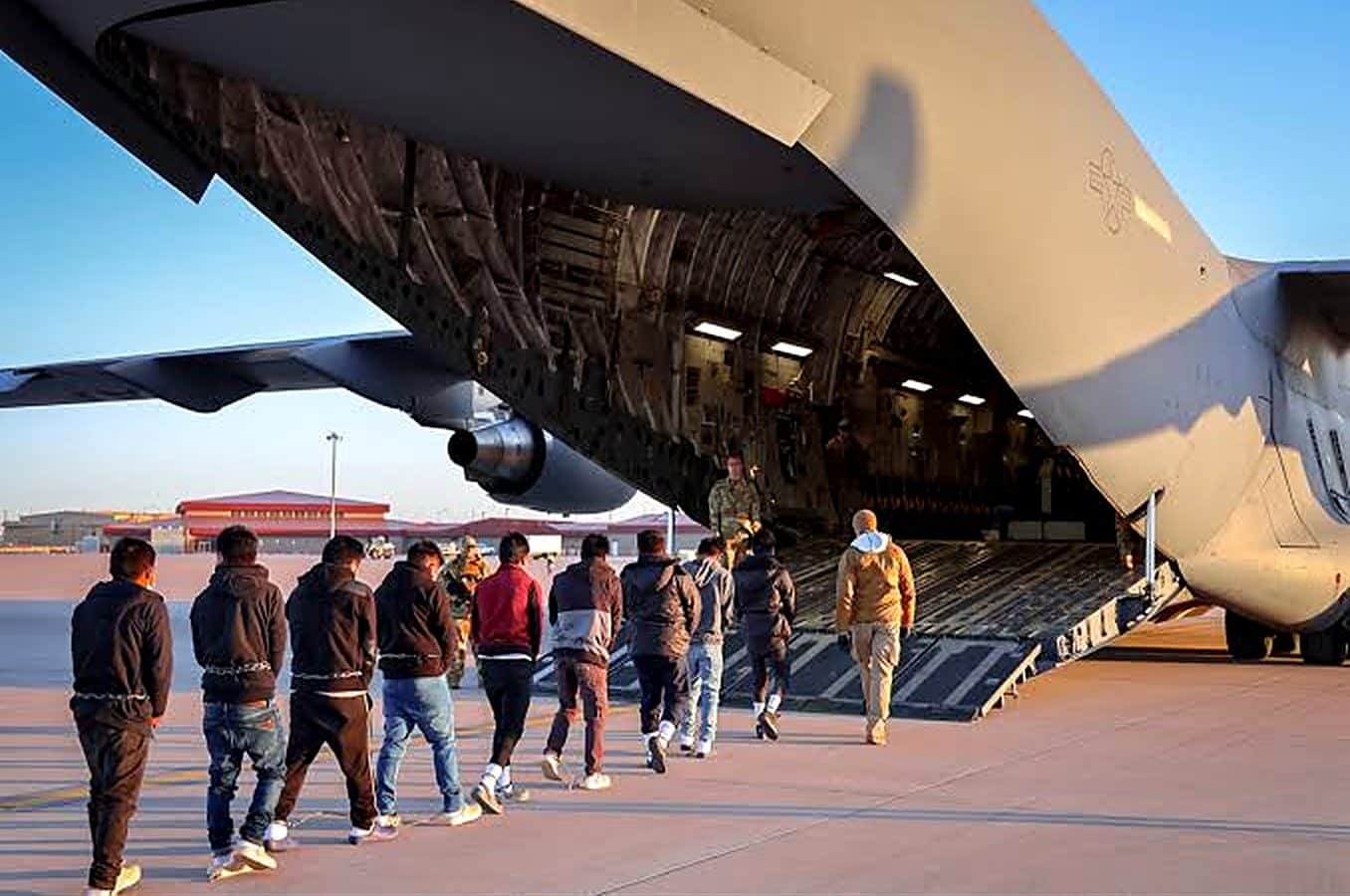
MBABANE: Two Vietnamese nationals deported from the United States to Eswatini last year have been repatriated, the kingdom’s government announced on Tuesday.
The pair left Eswatini on Monday, 2 November, and arrived in Vietnam the following day, according to a statement by Acting Government Spokesperson Thabile Mdluli.
They were among the second group of third-country nationals sent to the kingdom in 2025 under its controversial agreement with Washington.
Mdluli said their return was “facilitated through the assistance and cooperation of relevant partners”.
The government described their departure as “another positive development in the ongoing efforts to facilitate the voluntary return of TCNs to their respective countries of origin”.
Government says returns are voluntary
The statement thanked the partners involved, saying their cooperation had been “invaluable in ensuring that the process is undertaken in a safe, orderly and dignified manner”.
It did not identify those partners, disclose the travel route or specify who paid for the flights.
“The Government remains committed to working with relevant national authorities and international partners in facilitating voluntary repatriations, while ensuring due regard for the rights, dignity and well-being of the individuals concerned,” Mdluli said.
The statement did not include comments from the two nationals or details of how their consent to return had been established.
The agreement with Washington
Eswatini agreed in 2025 to receive people deported from the US who are not citizens of the kingdom, holding them while arrangements are made for their return to their countries of origin.
ALSO READ: Three US deportees return home as Eswatini rejects secret release claims
The Trump administration has said people transferred under such arrangements had been convicted of serious crimes.
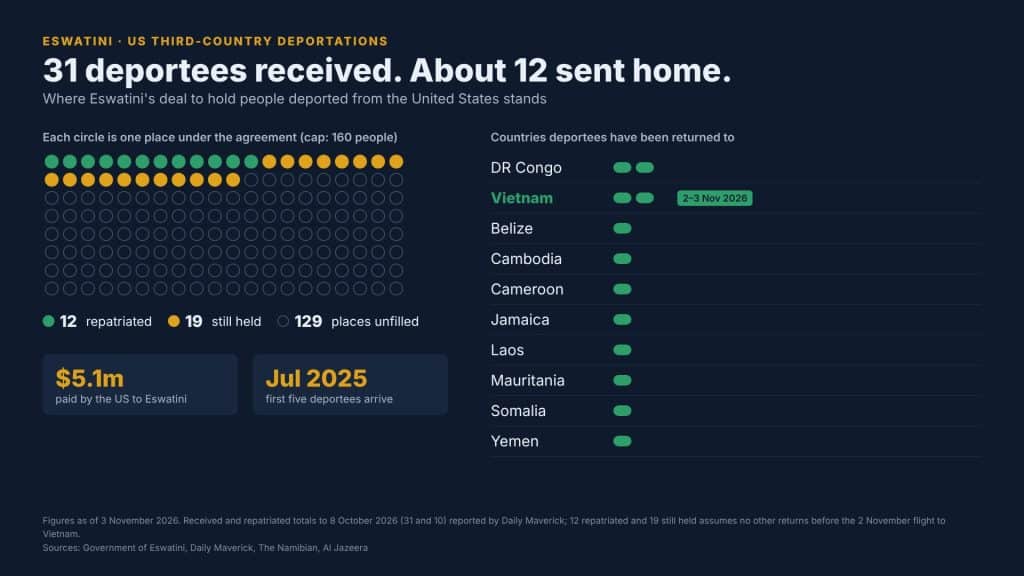
Finance Minister Neal Rijkenberg confirmed in Parliament in November 2025 that Eswatini had received US$5.1 million under the agreement. The arrangement allows for up to 160 deportees, according to an agreement reviewed by Human Rights Watch and reported on by The Namibian.
Mdluli said at the time that Washington was “financing the welfare and repatriation costs” of those sent to Eswatini.
The first five deportees arrived in July 2025, followed by another 10 in October that year.
US immigration lawyer Tin Thanh Nguyen said the second group included three Vietnamese nationals, Al Jazeera reported.
Eswatini said the deportees would be held in correctional facilities pending repatriation.
No updated total
Previous returns included nationals of Jamaica, Cambodia, Mauritania, Somalia, Cameroon, Yemen, Belize, Laos and the Democratic Republic of Congo.
If no other transfers or departures have occurred since that report, the return of the two Vietnamese nationals would bring the number repatriated to 12, leaving 19 in Eswatini.
Tuesday’s government statement did not provide an updated total.
Legal challenge and detention concerns
The agreement has drawn opposition from legal and human rights organisations.
ALSO READ: Eswatini repatriates two US deportees as pressure mounts over secretive migration deal
The Eswatini Litigation Centre, Swaziland Rural Women’s Assembly and Southern Africa Litigation Centre have challenged it in the High Court, arguing that it is unconstitutional because it was neither ratified by Parliament nor subjected to public participation.
The organisations have said that “African nations cannot serve as dumping grounds for unresolved issues”.
Amnesty International has raised concerns about arbitrary detention, restrictions on access to lawyers, denial of due process and the risk of people being returned to countries where they could face harm.
Nguyen has also said he was unable to contact his clients in Eswatini and that lawyers had been denied access to them.
The government, meanwhile, maintains that it is working with national authorities and international partners to facilitate voluntary returns while respecting the deportees’ rights and dignity.
Regional unease
South Africa has also expressed concern about the arrangement.
In August 2025, the Department of International Relations and Cooperation said it was “deeply concerned” about the deportees’ profiles and the possible implications for national security, given Eswatini’s proximity.
Eswatini has rejected reports that deportees were released into South Africa, describing them as “misleading” and warning that they could create “unnecessary apprehension and anxiety” in neighbouring countries.
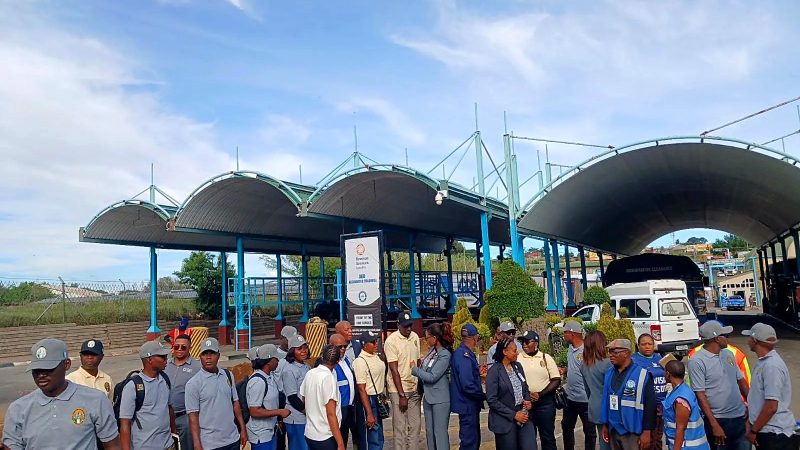
South Africa’s Border Management Authority has said its land ports are secure.
The latest repatriations show that some of those sent to Eswatini are leaving the kingdom. They do not resolve the wider questions surrounding the agreement: how long others may remain in detention, whether they have effective access to legal assistance and what safeguards govern their eventual return.